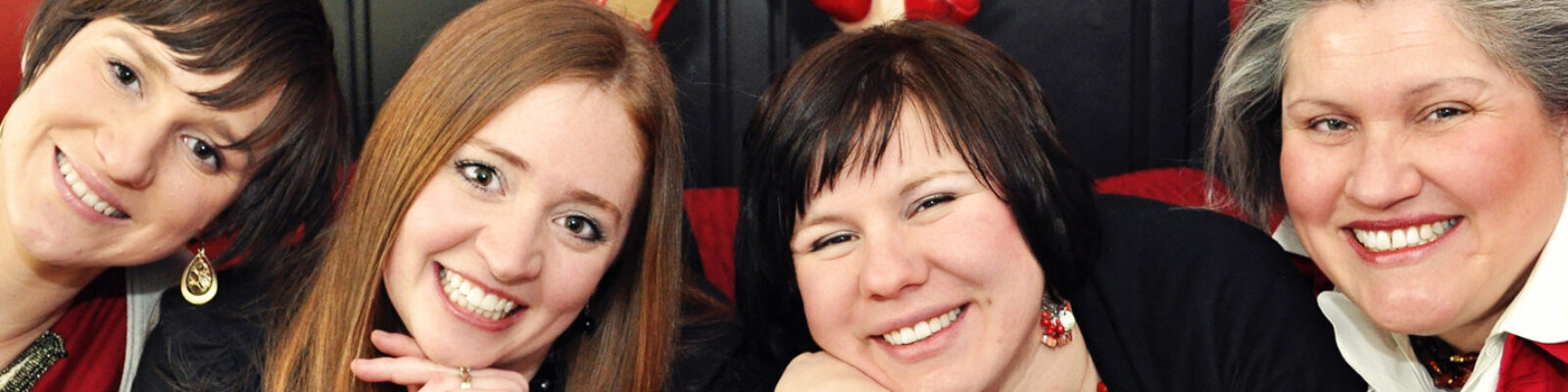
General Conference Teaches Women Have Power

Mormon-women-at-LDS-General-Conference-Oct-2009

As I have read through all the talks from October’s General Conference, I was struck by how many talks were about POWER. As women, we sometimes assume that the men have all the Power, but that isn’t true. Women have Power, and an obligation, to make something of themselves, and their families.

Elder Scott started the conference by talking about The Power of Scripture. He invited us to recognize the Power that comes when we memorize scripture and can recite it whenever our faith needs bolstering. “Scriptures can calm an agitated soul, giving peace, hope and a restoration of confidence in one’s ability to overcome the challenges of life. They have potent Power to heal emotional challenges when there is faith in the Savior. They can accelerate physical healing.”

I loved Elder Alonso’s talk where he almost dared us to stop questioning the Spirit, but ACT on his command, “without delay”. Pres. Packer told us we have the Power of the Holy Ghost, the Power of Repentance, and the Power to choose. The Lord has such confidence in us. Pres. Uchtdorf reminded us that we are children of a Powerful Being and we have inherited His Power. “Compared to God, man is nothing; yet we are everything to God.” We need to repeat that mantra to ourselves daily.

We have been given the Power to seal families together for eternity. Think about that. Elder Bednar urged the young people to get on their computers and wield this Powerful technology to do the holy work of the Lord. Along the same lines of sealing families together, we also have the Power to procreate. Remember, this life is a test. We may never have this particular Power again. Let’s use it well.

It was both Elder Curtis’  and Elder Christofferson’s talks that reminded us that it is Jesus’ “wondrous Pow’r” of redemptive love that allows us the Power to repent. How appropriate that there were two talks about this most wonderful of all Powerful gifts.

Whenever I see a talk geared toward the Aaronic Priesthood, I listen closely. It is my responsibility, as that boy’s mother, to make sure my son acts upon his Priesthood privilege. Both of us must recognize the Power of the Priesthood.

Elder Waddell made me think of MasterCard. Serving a mission–Great! The Continuing Service of a mission–Priceless! We have the Power to change lives–every day–by our example, love, and invitation. As we open our mouths, the Spirit of the scriptures needs to come out. We have to understand the scriptures and use them to better our lives, and the lives of those around us. Pres. Eyring inspired us to “teach with increased conviction and bear witness with Power”.

I think everyone is familiar with Elder Hales’ health challenges. If anyone knows about patience, it would be him. He says, “I bear my special witness that our Savior’s promise is true.” Quoting the Savior, he concluded with, “May we wait upon Him by pressing forward in faith, that we may say in our prayers, ‘Thy will be done’, and return to Him with honor.” There is Power in this phrase. Not just in the words, but in the action we demonstrate.

We understand that the Book of Mormon is a book with Power. Elder Callister’s talk reminds us that this Powerful book testifies of Christ, is about Christ, and teaches us how to return to Christ.

Sis. Dalton has given some good talks, but I thought this was one of her best. Men, honor the women in your lives by honoring the Priesthood. There is Power in the family of a Priesthood-holding father and a nurturing mother. Our faith must be placed in the witness that God will see to all of our personal situations. All women have access to the Priesthood. She also said “your personal purity will give you Power”. To me, that means it’s my responsibility to strive to live up to the Powerful privileges God lovingly offers me.

Pres. Monson’s talk on morality is something each one of us needs to study very carefully. His final words to us were quoting the Savior, who said, “Fear thou not; for I am with thee: be not dismayed; for I am thy God: I will strengthen thee; yea, I will help thee; yea, I will uphold thee with the right hand of my righteousness.” As we continue living in a morally degrading society, we can hang on to God, who will never fail us. He is our strength. He is our Power to be righteous. His righteousness will sustain us.

All the talks testify of Christ, but at least one always focuses completely on the Savior. This time it was Elder Oaks who clearly stated that all Power and majesty comes from Jesus Christ who is the Son of God and Savior of the World.

We will always be reminded that we have the Power to choose. Elder Bennett quotes Pres. Monson, “I can’t stress too strongly that decisions determine destiny. You can’t make eternal decisions without eternal consequences.” Ultimately, we only have two choices. “It is never too late to begin to choose eternal life!”

I think my favorite talk was Elder Cook’s, The Songs They Could Not Sing. When bad things happen–sufferings, early death, happenings that seem unfair to us–the Lord will make everything right. We have Power, because we have knowledge and understanding. Jesus Christ has overcome our sorrow.

Pres. Monson’s concluding words were, “May the spirit we have felt here be and abide with us as we go about those things which occupy us each day. May we show increased kindness one toward another. May we ever be found doing the work of the Lord.”

Women have a lot of Power in this Church. We have the Power to call down the heavens to protect ourselves and our families. We have the Power to understand the scriptures, thereby understanding God and His Plan of Salvation. We also have the Power to teach, train, and testify. When we were baptized, we were given the Gift and Power of the Holy Ghost. When we enter the temple of our Lord, we make covenants with Him with the hope of receiving all His Powers, Dominions, and Glory.

Mormon Channel

mormon channel

Have you ever listened to the Mormon Channel? They offer a daily variety of programs to listen to. Especially interesting to us might be the programs about Relief Society. They  have episodes on the Visiting Teaching Message for the month, Questions and Answers answered by Sis. Beck, and discussions on the Daughter in My Kingdom book. They also offer ideas on how to celebrate the 170th anniversary of the organization of the Relief Society this year.

You will also run into other interesting programs of interviews, music, ideas for youth, conference talks, etc.

Take a listen.

Mormon Channel

Jessie Evans Smith

Pres. and Sis. Smith

How many women have been lost and forgotten over time? Millions! One, that I would like to remind you of right now is Jessie Evans, born in 1902.

She began singing with the Mormon Tabernacle Choir at the age of fifteen. Later, she sang all over the world with opera companies. She was asked to sing with the Metropolitan Opera, but turned them down. Around this time, she was also offered the part of Mother Superior, in the Sound of Music, but turned it down as well.

She was a popular soloist around town, including singing with the Mormon Tabernacle Choir. As Ethel Reynolds Smith, Joseph Fielding Smith’s second wife, lay in her bed, she requested that Jessie Evans sing at her funeral. Shortly after that, the two began seeing each other.

Jessie Evans and Joseph Fielding got married in 1938, when Jessie was 36 years old and he was 62. By then she had developed her full character and was completely secure in herself. She is most noted for her flamboyance and confidence; a real character we should admire. She made life full and invited all those around her to come along for the ride, including her prophet husband.

Enjoy these stories and notables about her (be warned, some may be a bit exaggerated):

“While Joseph Fielding Smith was a stern man in public, his wife, Jessie Evans Smith, was vivacious and outgoing. When asked by her husband to speak during a priesthood meeting to which she had accompanied him, she opened with, “Brethren, do you know what you get when you grow marijuana on the stake farm?” Startled, the men looked at each other waiting for the punch line. “High priests!” she chuckled.”

Jessie Evans traveled all over the world with her husband, speaking, as well as singing, at many conferences. Often, she would drag Pres. Smith up with her to sing duets. These became known as “do its”, because Pres. Smith knew there was no choice in the matter.”

An excellent needlepointer, she invented a magnifying glass that could show her work more clearly, while freeing her hands.

She has sung, with the Mormon Tabernacle Choir, longer than any other member: 50 years.

Being the third wife, and instant mother of eleven children, she told them right away she was not there to replace their mothers. They called her “Aunt Jessie” from the very beginning, and grew to love her quirky, and very loving, personality.

Jessie was quite a bit younger than Joseph Fielding. He was known for his austere demeanor, but she kept him young and lively. Many times she was heard kindly yelling, “Joe, hurry up!” and he would come arunnin’.

“The Smiths’ home was invaded by reporters and cameramen wanting to interview Jessie Evans. As one cameraman tried to take a picture of her she screamed, ‘No, you can’t take my picture. I’m not wearing my Bible dress.’ When the reporters asked her what a Bible dress was, she smiled–she’d been waiting for them to ask. She just patted her ample bosom and said airily, ‘A Bible dress–you know–low and behold.”

“One time President Smith gave a strong talk on how the brethren should preside in the home and not their wives. Afterwards Sister Smith got up and said how much she agreed with her husband’s remarks, adding, however, that although President Smith might preside in their home, she conducted.”

“One day President Smith gave a talk in conference and for his subject he chose being in the world and not of the world. Eventually he got onto the subject of loose women and how to spot them. One of his criteria of a loose woman was that she wore too much makeup. ‘Let this be a warning to you women: don’t wear too much makeup,’ he said sternly. And all the while there sat Aunt Jessie behind him in the choir section, smiling and waving at everyone–with her lipstick on three inches thick.”

“We were on our way to the elevator when the door opened and out came President and Sister Smith. We just stood there with our mouths open, staring at him and didn’t say anything. President Smith kind of walked around our group, kind of looking at the ground like he didn’t even see us. Jessie Evans smiled and nodded at us and said, ‘Daddy, come back here, these kids want to talk to you for a while.’ So he turned around and came back and laughed and joked with us for five or six minutes.”

In her talks she would say, “Wait for the right one, girls. The right one can take you to the temple. I waited!”

She bore testimony: “Always remember that the Lord has the power to do for us what we can’t do for ourselves. If we do our part and prayerfully seek him, he’ll be with us. I know. Decisions ought to be made in favor of our Heavenly Father. When I had an opportunity as a young woman to become a contralto with the Metropolitan Opera, I told them I’d have to pray about it. I also studied my patriarchal blessing, which promised me that my success would come in the service of the Lord. So I came home and rejoined the Tabernacle Choir.”

Known for her happiness and quick smile, she said, “Happiness isn’t always doing what you want to do. Sometimes it’s doing what you don’t want to do and being glad you did.” At her funeral it was said of her that she knew it was her duty to be happy.

She was glad to be a woman and wanted all women to feel the same. “Women are the flowers in God’s great garden, and they ought to look perky.” Aunt Jessie’s brightly flowered gowns, her multicolored beads and earrings, and the ever-present orchid were trademarks. When she sang “I Enjoy Being a Girl” at BYU, the laughter and applause shook the rafters.

Stories gathered from:
“The Legend of Jessie Evans Smith”, Linda Harris, Utah Historical Quarterly, Vol 44
Emerson Roy West, Latter-Day Prophets
“The Legacy of Jessie Evans Smith”, Elaine Cannon, The New Era, Sep. 1971

What The Scriptures Teach Us If We Let Them

Elijah and widow

I’m realizing more and more just how profitable it is to search the scriptures, learn from them, then teach the beautiful doctrine that is in them. First, there is no way we can remember everything that is in those pages, and Second, as we confront all the many experiences life brings, those pages will speak to us anew. Finally, we owe it to one another, as sisters in this Society, to bolster one another from the words of our Lord, and Savior, and the Holy Ghost.

In the blog world, there is a segment of women who are dissatisfied with the gospel. Many of them feel the gospel (and Church), excludes women; therefore, there is no place for them here. The world would have us believe it’s time to rear our heads and stand our ground of equal time and importance.

The Brethren admit that women deserve more real time, as opposed to pedestal time, and they are working toward doing just that. It’s okay to provoke the Brethren to good works (according to Joseph Smith), but our focus should not be about equal time, as the world sees it. It should be about securing our salvation. Unfortunately, the world inches into our lives ever more, ever more.

Sis. Beck, and her counselors, have spoken frequently on the worth of women, their strength in the past, and their important purpose in the future. Through personal revelation, women have the responsibility to “know for themselves” their place in the kingdom of God. Indeed, each of us has a place waiting for us.

Recently, Sis. Allred addressed this in a Sacrament Meeting. After hearing her words, I went home, searched and pondered the scriptures for myself, and now would like to share with you my thoughts.

In Mosiah, Chapter 4, King Benjamin has just finished his speech and the multitude has fallen to the earth because they realize just how human they are, and full of sin. They feel the absolute need for the atoning blood of Christ in their lives to return back to their Father’s presence, and having faith, they beg for it. Within a sentence, they feel the Spirit come upon them and they are filled with joy at the knowledge that they have been cleansed.

Further in the chapter, in verse 11, these steps are spelled out in more detail: 1) We know of His goodness when we taste of His love. 2) We need to remember that. 3) We are unworthy creatures, still loved by Him — We need to be humble of that incredible and undying fact. 4) We need to call on Him daily. He loves us, He wants to help us, but He does require that we turn to Him first 5) Because it is our faith in His Son that must be proved –never His love for us.

Verse 12 tells us just how worth it these simple steps are to do:

And behold, I say unto you that if ye do this ye shall always rejoice, and be filled with the love of God, and always retain a remission of your sins; and ye shall grow in the knowledge of the glory of him that created you, or in the knowledge of that which is just and true.

Now, let’s turn to 1 Kings, Chapter 17. Elijah was hiding from King Ahab. The Lord was directing him to places of safety. There were many widows around, but apparently God knew of a widow in Zarephath that was faithful enough to take Elijah in.

This poor woman was found collecting sticks to bake the last of her flour and oil into a biscuit for her and her son. Then they were prepared to await death by starvation. Elijah comes along and asks her to make the biscuit for him, then they could have what was left. He tells her upfront that the Lord will fill her barrel and cruse and she goes and does his bidding.

This woman was a widow, so we know she hasn’t had it easy. Perhaps she has already proven her faith many times before. She and her son must have been rationing their food already, so she was probably hungry. Everyone was suffering in the draught. She may not have understood everything that was happening, she may have wondered how it would all work out. She may have even hesitated for a bit. But she did what she was asked. If there was any complaining, it didn’t stay long. Perhaps she didn’t complain at all.

But it’s not over yet. After this act of faith, she is again tested when her son falls ill and dies. Why would the Lord put her through this all over again? This is an example of remembering, even, and especially, through the hard times. This widow had faith, and she proved it again when she testifies to Elijah.

If you look at the footnote of verse 18, it cross references to Job 13, where Job is testifying of his own faith in God. This woman was faithful even to the end.

Are we this faithful? Or do we complain blindly? Do we expect to understand everything and lose faith when we don’t? Can our Heavenly Father trust us as He has asked us to trust Him? Are we humble enough to be reminded over and over again? Do we really know that God loves us? Is our faith steadfast enough to prove ourselves trustworthy? Isn’t that what we committed to do before we came down here?

Obligations of Membership in Relief Society

mormon women

Back in 1969, Elder Harold B. Lee was asked, by the Relief Society General Presidency, to address the women on the obligations of membership in the Relief Society. I’ve outlined a little of what he said:

He quoted the First Presidency, who spoke at the Relief Society Centennial, in 1947: “Frequent recurrence to fundamentals is essential to perpetuity.” That’s what we are told over and over again: To go back to the basics, or “Remember”.

He begins with the responsibility of Relief Society in consecration to service–”spiritual serving, as shown by obedience, good works, and love, as dedicated to the service of God. Mother’s role is to teach the gospel.” A woman’s great service in the Kingdom is to see that the gospel is taught to the family. Quoting from D&C 1:21, 25-28, he makes these four points:

  1. That faith also might increase in the earth
  2.   And inasmuch as they sought wisdom that they might be instructed
  3.   And inasmuch as they sinned they might be chastened that they might repent
  4.   And inasmuch as they might be made strong, and blessed from on high, and receive knowledge from time to time

“Now the mothers role in this vital home-centered gospel teaching is very clear…Put Father at the head of the house, even when he doesn’t seem to deserve it. Provoking husbands to honor their priesthood when they are not honoring their priesthood; enlisting the aid of the priesthood in helping you with family problems.” Women without the priesthood in their home need to feel comfortable calling upon their home teachers, bishops, and fathers. This is a Patriarchal Church, governed by the Priesthood.

However, he gives the example of visiting a stake where her learned a low percentage of couples were being married in the temple. He asked if there was a temple going mother, of many children, in the stake whose children were all active and had gone to the temple.

The Stake President thought of a woman; a mother of eleven children. Elder Lee asked her what two things she did to keep her children active in the Church. She thought about it for a minute, and said:

  1. “I always was there at the crossroads of the home, when my children were coming to or going from the home” and
  2.   “Whatever we did we did together as a family. We played together, we prayed together, we worked together, we did everything together.”

The youngest daughter of this woman happened to be sitting in the congregation. Elder Lee asked her how she felt about her family. She related that as a teen, one Sunday, she refused to go to Church. The family was gone all day with Church activity and she remembered how lonely she was that day. After the many hours of being with her family, she realized she wanted to maintain her place in her eternal family circle, and not blow it over some stupid willful mistake.

Elder Lee stressed that women should work side by side with the Brethren as they serve in the Church and administer with the Priesthood. Today, our handbook reiterates that bishops should seek help from the Relief Society to fully serve the ward.

“The Relief Society helps in the government of the Church. The Relief Society, as no other organization, is the ‘handmaiden’ of the Priesthood of God. In their joint responsibility in rendering compassionate service, they present a sort of ‘Father and Mother Image’ in the Kingdom of God to look after the needy and the unfortunate.”

Another point he made was to have “loyalty to each other”. “Visiting teachers have their place in the teaching of Mothers who have not developed the knowledge and methods in keeping pace with their children.” Hold Family Home Evening as families, and help your sisters to hold it in their own homes.

Then he broached the subject of sex education. This began being a problem in the 60s and 70s and remains so today.

He quoted J. Reuben Clark, who said, “A word on chastity can begin in one sentence: Be Chaste. That tells everything. You do not need to know all the details of reproduction processes in order to keep clean. Be chaste because God commanded it…Thou shall not commit adultery said the Lord…The Lord used the words [adultery and fornication] interchangeably.”

Elder Lee continued, “Sisters can help one another to strengthen our families. Stay chaste, teach chastity, and support one another in righteousness. “Be loyal to each other, as sisters in the gospel of the kingdom.”

He asks a question: Can one ever graduate from Relief Society? “There must be a constant reassessing of what Relief Society gives to make certain nothing is left out in filling the needs of younger mothers and older grandmothers to fulfill the purpose of the Relief Society as defined by the Prophet Joseph Smith. And keep in mind what I said as I started, ‘frequent recurrence to fundamentals is essential to perpetuity…Relief Society must not be something simply to duplicate worldly organizations, such as social clubs, or PTA, or literary societies, but Relief Society must make a significant contribution not to be obtained anywhere else.”

General Omar Bradley was a famous general under General Dwight D. Eisenhower in WWII. Elder Lee shared a saying this general liked to say: “Bravery is courage in action.” Elder Lee’s closing words were: “May the Lord bless us so to do, and give us the courage of our convictions in these troublous days and challenging times in which we live.”

This talk could have been given this past week. Everything still applies to us today. I found some valuable food for thought in this talk and I hope you do too.


Information found in “Obligations of Membership in Relief Society”, Elder Harold B. Lee, Relief Society Magazine, Jan 1969.

Visiting Teaching Stories–Jan 2012 Message

visiting teaching 2

I thought, in honor of our Visiting Teaching message this month, I would look through the Ensign and find stories about visiting teaching.

  • I went through the motions of family life day after day but felt increasingly alone. One day, my visiting teachers called. They shared with me a lesson on reading the scriptures. I remember telling them I was familiar with the stories and doctrine, but after hearing my list of excuses, Sister Crowley challenged me to read every day, even if it was only a little. She and her companion left with words of encouragement and a prayer in my behalf. I decided I could commit to read something, even if it was only one verse. As I did so, it was as though a light had finally been turned on in the mist of darkness, and I could see. Through reading the Lord’s words, I began to let Him into my life to heal me.
  • How can we be there for sisters who appear to have perfect lives? No life is untouched by sorrow. Stay close, stay watchful, be there for that moment when only a hug will do.
  • I have had many visiting teachers: older women, students, and mothers with children in tow. I still try to be as self-reliant as possible, but when I genuinely need help, now I don’t hesitate to ask. Some sisters have brought me dinner after the birth of a child; some have been emergency baby-sitters. The older women have given me precious words of hope and comfort gleaned from their years of experience.
  • As visiting teachers remember a sister, it is her family that also receives, and benefits, from their watchcare. This is especially true for the elderly, whose families may not be able to see them on a daily basis.
  • As a young newlywed I became a visiting teacher for the first time. I had visions of being inspirational, loving, and kind, and of doing great acts of service. In other words, I wanted to be the perfect visiting teacher. Yet when I received the names of the sisters on my route, I had feelings of trepidation. These women were all older and far more experienced than I was. What did I have to offer these women? As I prepared my first lesson, I felt prompted to pick a certain talk on dealing with adversity. I feared my lesson might sound like a lecture or, worse yet, that she might think I assumed she wasn’t handling her life well. I hesitantly told her I had felt she needed to hear about a particular conference address, but after talking with her, I wasn’t sure it was relevant to her situation. I explained how I had been praying to be in tune with the needs of the sisters I visited and how forcefully the inspiration had come to choose this particular lesson. I related how, during the hour before my appointment with her, I had found scriptures and extra resources that seemed to open up in just the right places. When I told her the topic, the smile slipped away from her lips and tears welled up in her eyes. I listened as she opened up and told me how she had been struggling during the past couple of weeks. Her husband had been working out of town, and she was feeling discouraged and alone as she dealt with some challenging circumstances. I shared with her the message I had felt impressed to give. Before I arose to go, we knelt in prayer, and she thanked Heavenly Father for knowing her needs.
  • Sisters who live a long distance from one another have a standing appointment that they each look forward to and depend upon.
  • To add to my responsibilities, the Relief Society president gave me a visiting teaching list of 12 sisters who lived in a barrio across town. I’ll admit I was not thrilled about my new assignment. I was busy with my other callings, and I was afraid that I wouldn’t know how to reach out to these Latina sisters. But I made some visiting teaching appointments, and before I knew it I was sitting in the Dumez’s living room. “You’re my visiting teacher?” Sister Dumez asked as she entered the room. “Welcome to my home. I haven’t had a visiting teacher in two years.” She listened intently to the message, we visited, and she thanked me again and again for coming. Before I left she called her five children together to sing “I Am a Child of God” in Spanish. After that welcome, I felt I could easily handle this assignment.
  • Some ward members live a plane ride away. Monthly phone calls become a lifeline for them. With visiting teachers, home teachers, Bishoprics, Relief Society and YM/YW leaders calling each month, families can still feel that watchcare.
  • I never met her personally, but for many months Jeanette faithfully “visited” me by telephone. I grew very fond of her and looked forward to her calls, although I still didn’t attend church. On one occasion Jeanette helped find someone who could drive my daughter to Utah to visit her father, from whom I was divorced. On other occasions she helped locate babysitters. If she could not contact me by telephone, she would dictate sweet cards with the visiting teaching message or personal “thinking of you” or holiday messages. At one point, Jeanette told me they were revising assignments and asked me if I wanted a “real” visiting teacher. I emphatically told her I wouldn’t trade her for anything, and please not to have her assignment to me changed. I know Jeanette must have been very discouraged by my failure to attend church, and she can’t have thought she was a successful visiting teacher as she patiently listened to my self-pitying stories. Finally, after years of inactivity, I showed up at church. As I was sitting in Relief Society the roll was passed to me. I saw Jeanette’s name and leaned over to count down the row to identify her. After class, I went and knelt down in front of that lovely woman and took her hands in mine. I said, “Jeanette, I’m Evelyn.”  Her face lit up with a great smile, and she placed her hands on my cheeks and said, “Oh, Evelyn, I’m so glad to see you here.”
  • Mercedes became a dedicated visiting teacher in Chile. She and her companion, Olga Barros, visited an elderly sister who lived with her daughter, who had an intellectual impairment. One day Mercedes and Olga arrived to find the daughter distressed and confused. She said that her mother had been tired after lunch and had lain down to rest. When the daughter tried to rouse her, she refused to wake up. At that very moment the visiting teachers arrived.
  • We can seldom foresee how the Lord will make us instruments in his hands. One year when my companion was out of town, my daughter Elizabeth went with me on my visits. It was Christmastime, so we baked cookies, wrapped them in cellophane, and tied them with red ribbon and a pine branch. Then we put all these little gifts in a bag and had a prayer together. At the last minute I felt a strong prompting and slipped in an extra package. After visiting several houses, we reached the home of a sister who lived with her married son and his family, all of whom were members. Another older woman, looking very tired, was there delivering clothing. Her name was Margarita, and she earned her living doing laundry by hand. Knowing what hard work that is, I handed her the other little package of cookies and wished her a Merry Christmas. With tears in her eyes, she told me that she was completely alone and that this would be her only gift. I spoke to her then about the Lord Jesus Christ and told her that if he is with us, we will not be lonely. I assured her that she was a daughter of God who loved her just as an earthly father loves his children and that if she sought after him, he would receive her with open arms. I told her many more things. Her face lighted up, and she agreed to receive the missionaries. The next month when we went to visit that house, Margarita was there again. She hugged us and said, “Now I can really call you sisters. I was baptized last week.”
  • I have enjoyed helping, encouraging, and listening to my sisters and taking a simple message in the Lord’s name. What thrills me most is the feeling that He is walking beside us. I always return with a radiant joy in my heart. Now we are visiting a sister who is ninety-four years old. She can no longer go out, and she sits at the window of her little house each month to wait for us. She is so glad to have someone to talk to. We love her dearly and would never disappoint her.
  • “You can come, but don’t mention the Church.” At first Alyce didn’t know what to say, but it didn’t take long for the two vivacious women to become good friends. Occasionally Alyce would call Karen between visits or send a card to let her know she was thinking of her. “It was not a once-a-month kind of thing,” Karen says. “And she never judged or pushed me. It was just what I needed at that time.” Karen’s activation occurred gradually over time, and though it was difficult to take the steps back to activity, Alyce’s warmth made the transition easier.
  • I was warned that this particular sister was difficult, but in the months that followed, I visited Virginia Madsen regularly. Through her, I developed a new perspective about visiting teaching. It was much more than an opportunity for pleasant conversation. I made friends with a unique and wonderful person I would never have known were it not for the visiting teaching program. My testimony of the importance of visiting teaching grew, and I looked forward to each visit. We met on Wednesdays, when her husband was gone, and I brought my children, according to her request. As we grew closer, Virginia told me about her own family. She had raised a large family of her own children and foster children. We shared stories, and she expressed concern about their trials and failures and joy about their victories. She cared deeply for her children and was determined to watch out for and support them, despite her weakened condition.  At her funeral, my eyes met those of a sister who had been Virginia’s visiting teacher before me; she had moved from the ward. Now, in a bond of common understanding, we reverently whispered, “Weren’t we the lucky ones to know Virginia Mae Madsen!”
  • A special connection happens when a sister sees her visiting teachers sacrifice just to visit her. Take, for example, a nurse who works at the hospital. Her teachers come to her on her lunch hour.
  • Kathy called every month for the first few months to try to schedule an appointment. Because I always dodged her visits, she started mailing me the Visiting Teaching Message instead. Every month the message would arrive like clockwork. This went on for four years, even after I married my boyfriend and we had two children. Some months I would throw the message away unread; other months I would read it and then throw it away. When my marriage failed, I found myself with a toddler and an infant to raise alone. I suddenly needed answers. When my monthly Visiting Teaching Message arrived again, I decided to attend church for the first time in ages. I felt so awkward, as if all my sins were written upon my sleeve. A sister I had known in the young single adult program welcomed me, and we sat down together. Suddenly here came Kathy. I looked away, embarrassed that I had not answered any of her kind notes. She smiled at me, chatted with my neighbor for a moment, and then sat with her husband. When I got home from work the next day, there was a message from Kathy on the answering machine. I couldn’t call her back. I just knew she wanted to tell me that I wasn’t allowed to come to church anymore, that my sins had been too great. I felt bad that Kathy had to convey this message to me, but I knew it was true. I had no place among the righteous. I couldn’t call her back, but the next evening she called me again. “I want to apologize,” she said. Why would Kathy possibly need to apologize to me? “I didn’t recognize you when I saw you at church on Sunday,” she said. “After sacrament meeting, I asked the sister you were sitting by who you were. By then you had already left. It was so good to see you.” I was dumbfounded. “I hope we can sit together the next time you come to church,” Kathy added. “I’d like that,” I said, suddenly feeling overcome with emotion. We did sit together the next Sunday—and for many Sundays after that. She served as my inspiration to be a better mother, a better member of the Church, and a better visiting teacher. She always listened patiently, without judging, just as I feel the Savior would.
  • Hidden from view by a larger house in front of it, the shabby little place had been difficult to find. Since no telephone number showed on Judy Kearns’s information card, we had checked the directory service, only to learn that she had an unlisted number. With each visit we had left a friendly note asking her to telephone us, but there was no response.  “Just another lost cause,” I thought as we drove down the street toward home, but my conscience nagged. Had we really gone the extra mile?   True, we had put our toes into the extra mile, but that was only a tiny distance, and full steps could be taken. That night, after four telephone calls, I managed to locate the visiting teacher from Judy’s previous ward. The information I got was vague, but I did get the unlisted telephone number. As I hung up, a little stirring of excitement lifted my spirits, and I eagerly dialed her number, only to be met again with the disappointment of prolonged, hollow, unanswered ringing. I tried again the next day and evening, but with no success. While I was on my way home several days later, the thought flashed into my mind that Judy, too, might be on her way home. On a quick impulse I swung the car in her direction and decided to take a chance. I switched off the motor to wait. When twenty-five minutes had ticked by I shifted nervously, knowing my own family would be arriving home wondering where Mom and the usual dinner aroma was. Uneasily I waited another fifteen minutes and was just getting ready to leave when an old, weather-beaten Volkswagen pulled into the driveway. By the time Judy had unloaded two small children from the car and located her house key, I was on the porch explaining who I was and expressing delight in finally having the opportunity to meet her. She responded with a cool, uncomfortable attitude, but my friendliness won and she invited me into her small living room. My visit was short, but I had established a relationship and made an appointment for another visit on her day off. At the door, I looked straight into her eyes and bore my testimony to the truthfulness of the gospel, and begged her not to deprive her precious children of the chance to share in its beauty. Her eyes filled with tears and I squeezed her hand as I left. I went to the Priesthood to verify her home teaching visits and a miracle happened. With the combined effort of dedicated men honoring their priesthood, and the miracle of women who care, it was thrilling to see the process in full operation, to see people eagerly following the Lord’s outlined programs. It was exciting to know that I belonged to His church. Judy came out to Church and the ward welcomed her with arms of love and responsibility, which she accepted gratefully. On the fast Sunday when Judy stood to bear her testimony for the first time, the chapel was especially quiet as we all listened closely. She humbly acknowledged her new-found security in the knowledge that the Lord walked with her and that his gospel brought the serenity to overcome fear and inadequacy. Tears of gratitude flowed down her cheeks as she expressed love for all those who had helped lift her life with their caring. As she finished, most of us reached for our handkerchiefs and sensed the elation of shared victory. Wiping my eyes, I marveled at the beautiful process that had brought about Judy’s transformation. And I knew, incredible as it seemed, that it had all begun with some meager efforts to go the extra mile in my visiting teaching assignment.

Visiting Teaching Message January 2012

visiting teaching

This month’s visiting teaching message is reminding us how to be better visiting teachers. They use the word “Watchcare”. That is a sweet term, isn’t it? We must watchcare over one another.

Before you set out to do your visiting teaching, be sure to read Chapter 7, Pure Religion, in Daughters in my Kingdom. This chapter gives us a comprehensive history, as well as warmhearted stories, of the blessings of this heavenly assignment. For more detailed history, read my post on Visiting Teaching: A Sacred Calling.

For further study, look up the talks given by Pres. Eyring, Sister Beck, Pres. Monson, as well as Sis. Thompson’s talk mentioned in the notes and the article on page 9 of this month’s Ensign. I appreciate our Relief Society leaders gathering information for us to draw from as we study these messages. Hearing from several people messages of inspiration, experience, and testimony helps us to gain the testimony we seek.

In Daughters in my Kingdom, page 108, you will find a quote from Eliza R. Snow. I love her directness in seeking a higher purpose in all that we do. What is this preparation she talks about?

“Sister Snow hoped that sisters would ‘perceive a difference in their houses’ after a visit. She counseled visiting teachers to prepare themselves spiritually before they visited homes so they would be able to ascertain and meet spiritual needs as well as temporal ones.”

As we prepare ourselves in our visiting teaching, surely it will strengthen our personal attitudes and testimony. Charity will burn through our souls and raise us to a higher level of love, understanding, and service.

I’ve often heard how people recognize a “happiness” among the Mormon people that is maybe a little out of character of this world. Where does this happiness come from? I think it’s this spirit that Sis. Snow speaks of. We know we are loved, so it’s easy to love others.

Originally, only a few women were given the calling to administer as visiting teachers for the entire ward. Over the years, this has evolved so that all sisters have the opportunity to care for one another. It is an opportunity, and a blessing, and should never be seen as a burden. As everyone will attest, and Sis. Thompson verbalizes: “When I went visiting teaching, I always felt better. I was lifted, loved, and blessed, usually much more than the sister I was visiting.”

Anything can happen during a visit. A teacher may come prepared with a message, but the Spirit will direct her to discuss something else entirely. An emergency may take place causing all to roll their sleeves up and dig in. Flexibility is the name of the game and visiting teaching should be seen as such. We are there to serve, lift, bless, and even be blessed. This is a time to share and see love in action. It is truly easy to love, because we feel love in return. For those few times we feel no love from the sister visited, the Lord can make up the difference, because this is His work.

As Pres. Monson has taught in a past Relief Society Meeting: Study diligently, pray earnestly, and serve willingly (Three Goals to Guide You, Nov 2007).

Check my Quotes Page for inspiring words from our leaders as well as inspiring stories people have experienced as they take this calling–Visiting Teacher–into their hearts.

The Magic Of Gratitude

gratitude

With the coming year approaching, I thought I would share this challenge with you. This is an article I found in the Ensign. It’s too bad so many wonderful, inspiring articles are lost as years pass by. With today’s technology, we have the ability to search through past articles to be re-inspired. Enjoy this article:

How can we enjoy closer, warmer associations with our children, our neighbors, and our business associates?

May I suggest that the magic word is gratitude. Gratitude is the prelude to love. It is the key to love. It is love in action.

Many weeks ago a dear friend gave me a challenge I both needed and accepted. It was this:

Pray to have your heart made into a vessel overflowing with love.

Act upon prayer by giving of yourself to at least one person every day.

Remember that gratitude is the key to love.

I felt inadequate to carry out this challenge, so I fasted for increased strength. Then wonderful things began to happen.

In our home my gratitude for my husband made him the most important man in the world. Our nine-year-old son responded gladly to my appreciation for him. Twelve-year-old Linda called me “kooky,” yet she melted into happy smiles whenever approached by the new me. It was our 14-year-old son who really convinced me that I had a magic formula. Communication with Jeff had been most aggravating; the wall between us was thick and hard and had caused me great concern. Yet during the following week, in a brief note, Jeff wrote, “Mom, it has been nice to be able to talk to you lately.” The fruits of gratitude were in our home.

Opportunities to test this magic in other places presented themselves one after another. The local seminary principal invited me to substitute in a New Testament class for two days. The subject was miracles. At the end of each of seven class periods, I challenged each student, using gratitude as the key, to go out and perform a miracle in the life of someone else. The next day a boy confessed, “I tried it. Everything about my day went smoother. The nice part was how it made me feel.”

Invited to teach a Relief Society cultural refinement lesson on the problem of communication, I again shared the idea of the magic of gratitude and gave the women the same challenge I had accepted. The three statements were displayed on a chart, and one vivacious young mother pleaded to take it home and hang it in her kitchen. Weeks passed before I saw her to ask her what effect the magic of gratitude had had in her life.

“It completely changed my attitude,” she declared. “My children appeared to be human beings again instead of monsters. Other people’s failings became inconspicuous and I could and did enjoy them for what they were. Doing the dishes was the same but I was different. Now I am learning to be grateful every day for every experience.”

The day I taught a lesson to my Primary class on how to pray, I learned another important truth about gratitude. I had explained that after approaching the Father in a reverent way, we should thank him for our blessings. And suddenly it seemed so clear to me. People who take time to truly pour out their hearts in gratitude, who frequently count their blessings before him verbally and praise him for his goodness, are the ones who talk to him in an easy and personal manner. Isn’t this the way all great prophets have approached their Maker?

A schoolteacher asked me to teach her third grade class for a week. She left a complete lesson plan but warned of certain children who would be sure to upset my rapport. Again I determined to use the magic of gratitude. I studied the difficult children, concentrating on all the good I knew about them. Whenever I could, I expressed appreciation for them—and they became my friends and helpers.

There isn’t a word in all the English language with more magic in it than the word gratitude. Love makes fertile the soil for things to blossom and to grow, and love begins with gratitude. Accept the challenge. Take this magic formula into your heart and convert it into a never-ending chain of happy relationships.

The Magic of Gratitude was written by Gerry P. Anderson and was first printed in the Ensign on March 1971.

Christmas Carols Beloved By All

Christmas carols

Christmas carols are beloved by all. We all enjoy singing them, whether we can sing or not. And who doesn’t love to hear a full choir sing in a cathedral with their notes resonating throughout the rafters. You may be surprised to hear how some of these carols came to be. Here are just a few random favorites:


Away In A Manger:

The words were originally thought to be written by Martin Luther, to his children, way back in the 1500s, but it really showed up for the first time in a songbook in Philadelphia in 1885. The words have been combined with several tunes over the years. In 1996, this carol and O Come All Ye Faithful were the two most beloved songs in England.


Far, Far Away In Judea’s Plain:

John McFarland’s family came from Scotland, where his father was the Queen of England’s coachman. They came to Utah as new converts of the LDS Church and settled in Cedar City where John organized a choir. Bishop Scanlon, from the Catholic Church, heard the choir and asked that John organize a choir for Mass to be held in St. George. Mass was held in the St. George LDS Tabernacle. It was shortly after this that John decided to write a Christmas song for his choir, because there weren’t enough Christmas carols for them to sing.


O Little Town In Bethlehem:

Phillips Brooks was the rector of the Trinity Church in Philadelphia. He took an extended trip to Europe, ending his journey in Israel. He went to the humble village of Bethlehem to see the birthplace of the Lord and was very touched by what he saw. After leaving the town, the words to this poem came to him as he reflected on the holiness he felt there.


Joy To The World:

The words are taken from Psalms 98. Isaac Watts wrote them in the 1700s, and it was originally written to glorify Christ’s triumphant return at the end of the world. Only later did it become popular as a Christmas carol. Today, it is the most published Christmas carol in North America.


O Holy Night:

In France, a Catholic priest asked one of his parishioners, Placide Cappeau, to write a poem for Christmas Mass. He wrote it in his carriage on his way to Paris. He was so moved by the words he had written that he asked his Jewish friend, Adolphe Adams, to set it to music. The song was first sung in 1847, and became beloved by the French people. Sometime later, Placide left the Church, and his Jewish friend was shunned, so the song was banned by the country. Meanwhile, an American, John Sullivan Dwight, felt the song could serve as an anthem for the abolitionists, “for the slave is our brother”.

Back in France, it was Christmas Eve 1871, the Franco-Prussian war was going on. In the middle of a battle on that holy night, a Frenchman stood up in a trench and began singing “Cantique de Noel” as loud as he could. Right after, a German soldier stood up and sang “From Heaven To Earth I Come”, a famous German song. For 24 hours the two sides held a truce celebrating Christmas Day.

Christmas Eve, 1907, was the first telecast over a wireless radio. Reginald Fessenden began reciting: “And it came to pass in those days, that there went out a decree from Caesar Augustus, that all the world should be taxed…” After reading the Christmas story, he picked up his violin and played “O Holy Night”, the first song ever played over the radio. Since then this song has continued to be beloved all over the world.


The idea of singing Christmas carols are thought to have begun in the fourth century in Rome. By the ninth and tenth centuries, songs were being sung in monasteries in Northern Europe. Francis of Assisi made Christmas carols popular, throughout all churches in the thirteenth century, in that country’s language. Martin Luther was a great lover of Christmas songs and many Protestants enjoyed singing praises about the Lord’s birth. In England, carolers would travel from house to house, singing carols as early as the 1400s.

Christmas was not properly celebrated in America until the mid 1800s. In 1843, Joseph Smith’s last Christmas alive, his family began their celebration at 1:00am when the family was woken up by Lettice Rushton and her grown children caroling in front of the Mansion House. Later in the day, Joseph and Emma hosted 100 people for dinner, dancing, and singing to celebrate the honored day.

It was once believed that if Christmas songs were sung before December, or after Christmas Day, it was extremely bad luck for the coming year.


An Extensive Sphere of Action, Dec 2011, VT Message

rs pres

As you read through our Visiting Teaching message this month, I hope Eliza R. Snow’s quote strikes a chord in every one of us, as sisters in the kingdom:

“If any of the daughters and mothers in Israel are feeling in the least circumscribed [limited] in their present spheres, they will now find ample scope for every power and capability for doing good with which they are most liberally endowed…Pres. Young has turned the key to a wide and extensive sphere of action and usefulness.”

I have come to know this year that women in the Church have always been respected and given power and responsibility. It is the world, and its limiting attitudes, that has pressed upon the men and women of several generations to misguide, misuse, and misrepresent the sphere of womanhood.

Well, sisters, we’re back! We, as women of God, have the power within us to do this magnificent work of the Lord. This work, to bring to pass the immortality and eternal life of mankind, is a glorious work that unites us as we save souls.

This knowledge alone makes understanding our organization’s history so important; so we don’t get lost ever again.

After studying this great history of our Relief Society, we have learned that our sisters of long ago were strong and capable. They were vital to the  beginnings of this last dispensation. Joseph Smith told those women that women of all dispensations have always actively magnified their callings and brought to pass much good in the work of the Lord.

Second John is written to the women of the Church. Joseph Smith told us that the “Elect Lady” is all of us. We each have a calling to work in the kingdom of God. We are great. We are strong. We have power. And we have the right to call upon the powers of heaven.

So, what does an Elect Lady do?  She raises her children in truth and love. Because we are agents unto the Lord, we have to stop thinking exclusively “our own children” and “our own households”. Most definitely, those of us who are mothers cannot afford to slack off. We must be diligent and valiant in our efforts in raising a righteous generation. But our responsibility, as women in the Church, grows exponentially when we realize that we are carriers of the gospel to the world with our examples, our knowledge, our stand on morality, and our love for all humankind.

Interestingly, this chapter can also be interpreted as speaking to “The Church”, often viewed as the feminine, guarding over her membership—children.  The Church is the walled city that protects, nurtures, and loves those within. As we await the Bridegroom, even Jesus Christ, it is crucial that “she” knows the scriptures in order to teach “her” children the truth that will bring them back to the presence of God.

The epistle closes with verse 13: “The children of thy elect sister greet thee.” As sisters, we must work diligently, so that our children can greet one another in the gospel throughout all generations of time.

We must seek after truth. We must teach with love. We must teach the commandments. We must be the finest examples of righteousness. “I have no greater joy than to hear that my children walk in truth” (3 John 1:4). Who is saying this? John? A Mother? The Church? God Himself? All of the above.

Emma Smith said we are going to do Something Extraordinary.

Eliza Snow’s example, as Brigham Young’s confidant, is a clear message that women are important in bringing about the work of the Lord.

Belle Spafford taught us that as daughters of God we have the power of influence. We can quietly go about influencing those around us, by our example, our suggestions to do what is right, and our ability to teach truth with power and love.

Julie Beck reminds us today that we have the ability to seek after personal revelation to guide us, direct us, encourage us, and give us the answers we need to make wise choices. We are not alone. We have direct access to Heavenly Father. He needs us to lead and influence the world.

We have been led by great women. There are great women all around us. We are great. May we all reach our greatest potential by being humble, faithful, and valiant.

For more ideas, see Chapter 4 of Daughters In My Kingdom

Powered by WordPress | Free T-Mobile phones at BestInCellPhones.com. | Thanks to Verizon Wireless, Facebook Games and The diet solution